
50 Years of Innovation: How Labconco Corporation Shaped the Modern Biosafety Cabinet
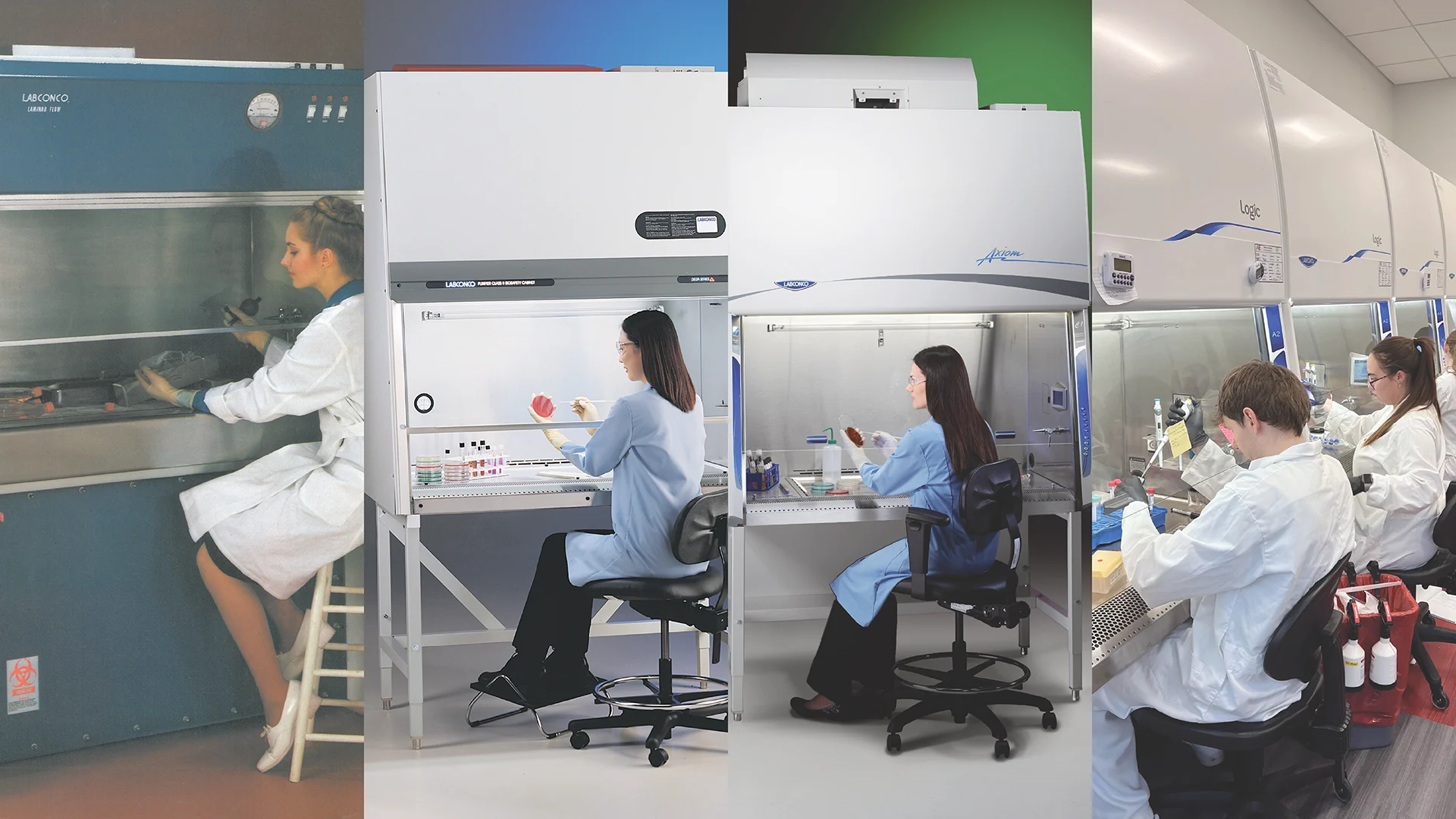
For half a century, biosafety cabinets (BSCs) have played a critical role in life science research, enabling breakthroughs in microbiology, cell culture, and biotechnology. As laboratories have evolved, becoming more complex, regulated, and performance-driven, so have the tools scientists rely on. Among the companies shaping this evolution, Labconco stands out as a consistent innovator, marking 50 years of BSC manufacturing with a legacy defined not just by incremental improvements, but by fundamental advancements in safety, performance, and technology.
Biosafety cabinets are more than just pieces of laboratory equipment; they are critical containment systems designed to protect personnel, products, and the surrounding environment. From early designs that closely resembled fume hoods to today’s highly engineered containment systems, the trajectory of BSC development mirrors the increasing sophistication of modern science. Over the past five decades, Labconco has played a central role in pushing this trajectory forward.
The Early Years: Advancing Containment Design
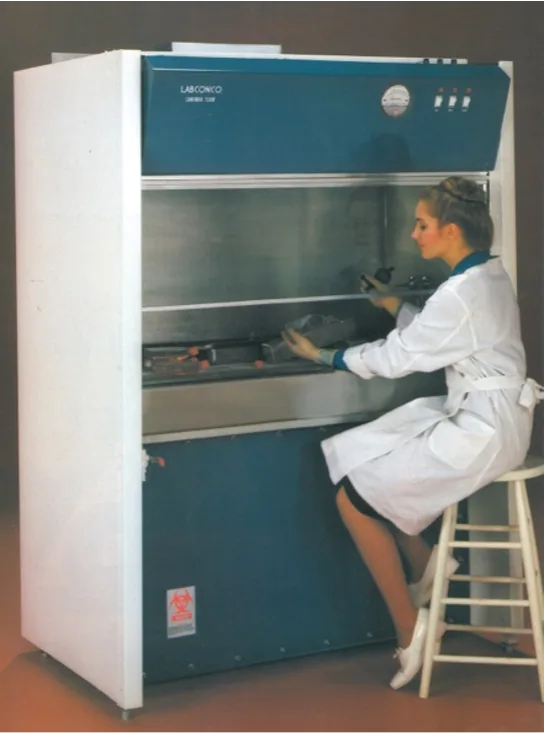
The journey begins in 1976, when Labconco introduced its first Laminar Flow Biohazard Safety Cabinet. This early design placed the blower and HEPA filter beneath the work surface, allowing contaminants to be filtered immediately and minimizing the volume of contaminated airflow within the cabinet. This approach reflected a growing understanding that containment was not only about filtration, but also about controlling airflow paths and exposure risk. Even at this early stage, Labconco emphasized flexibility, allowing filtered air to be either recirculated into the lab or exhausted through building systems depending on application needs.
As laboratory demands evolved, so did cabinet design. Moving the blower above the work area helped consolidate internal airflow pathways and reduce energy consumption, an early example of Labconco balancing performance with efficiency. Alongside these internal improvements, Labconco also introduced benchtop and stand-mounted BSCs, giving laboratories greater flexibility in installation height and enabling users to work in a more natural seated position, an important step forward in ergonomic design.
Designing Around the User
But the next major leap came in 1983 with the introduction of the Purifier Series. This cabinet brought a feature that would become an industry standard: the angled sash. By tilting the sash inward, Labconco improved visibility, reduced glare, and allowed users to sit closer to their work. What may seem like a simple geometric adjustment was in fact a major shift toward designing around the user, not just the process.
Labconco deepened this human-centered approach. The introduction of the Purifier® Delta in 2000 represented a comprehensive rethinking of how scientists interact with BSCs. Working with ergonomics experts and microbiologists, Labconco addressed the cumulative physical strain associated with long hours of laboratory work. Factors such as posture, reach, and repetitive motion that can impact both safety and productivity.
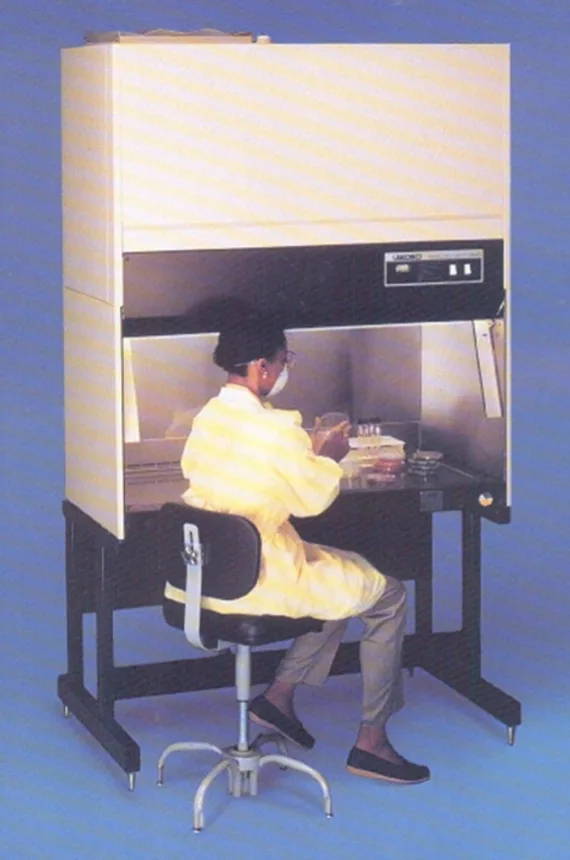
The Delta introduced Inclination Technology™, which optimized the working angle and reach depth of the cabinet. It also incorporated a curved armrest with airflow slots, allowing users to rest their arms without compromising containment. Controls were relocated for easier access, and visibility improvements ensured that critical information was always within the user’s line of sight. Importantly, these changes also enabled ADA compliance, making Labconco’s BSCs accessible to a broader range of users. This commitment to inclusive design reflected a broader philosophy: safety must extend to every user.
Integrating Smart Technology
By 2007, Labconco had moved beyond mechanical and physical improvements to integrate advanced electronics and real-time monitoring into its cabinets. The Purifier® Logic+ introduced the first line-of-sight LCD display, replacing traditional analog gauges with a digital interface that provided immediate, interpretable feedback. This innovation transformed how users interacted with their cabinets. Instead of interpreting pressure readings or responding to generic alarms, scientists could now see clear, descriptive information about airflow status and filter life.
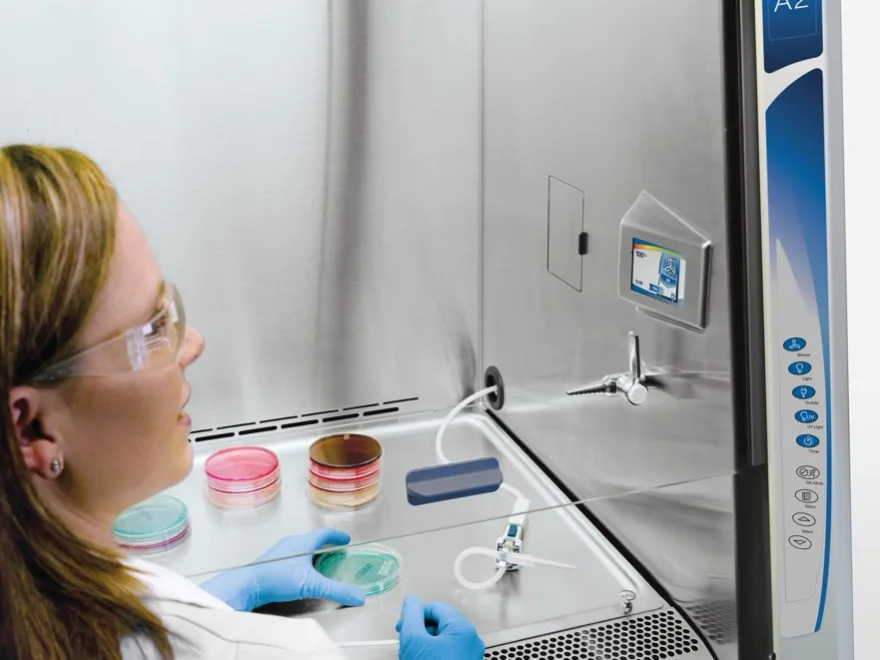
Central to this advancement was the switch to a DC Electronically Commutated Motor (ECM), with precise and efficient operation. This motor enabled Continuous Airflow Protection (CAP™) Technology. Using sensors embedded within the blower system, CAP Technology continuously monitored airflow conditions and automatically adjusted performance to maintain safe operating parameters. Changes such as gradual filter loading or temporary obstructions were detected and corrected in real time, keeping airflow within 2% of its setpoint between regular service and certification visits. This represented a major step forward in ensuring consistent containment, reducing the reliance on manual monitoring, and minimizing the risk of human error.
The integration of digital monitoring also introduced new capabilities, such as real-time HEPA filter life tracking. Instead of relying on scheduled maintenance or guesswork, users could now see exactly when filters required replacement, improving both safety and operational efficiency. These innovations demonstrated how technological advancements could enhance not just convenience, but core biosafety performance.
Engineering Excellence: The First Type C1 Biosafety Cabinet
Labconco’s leadership in innovation continued in 2014 with the introduction of the Axiom® Biosafety Cabinet, which defined an entirely new category: the Type C1 BSC. The Axiom comes with the flexibility to operate either as recirculating into the lab for standard cell biology use, or with an exhausted central chem-zone to allow the use of volatile chemicals.
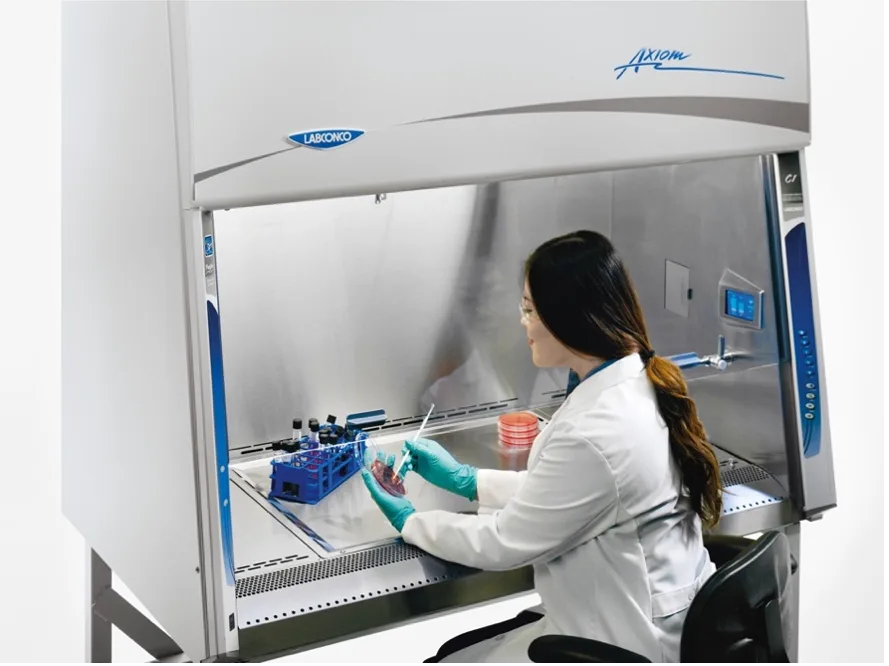
This was achieved through a dual airflow system that allowed the cabinet to operate in either recirculating mode or with an exhausted central chem-zone. By integrating an internal exhaust blower and Active Protection Protocol™, the Axiom provided a level of flexibility and safety that had not previously been available in a single cabinet. Laboratories no longer needed separate equipment for biological and chemical work or less efficient 100% exhausted BSCs, simplifying workflows and reducing infrastructure demands. The C1 BSC stands as one of Labconco’s most significant contributions to the field, expanding the very definition of what a biosafety cabinet can do.
Biosafety Redefined
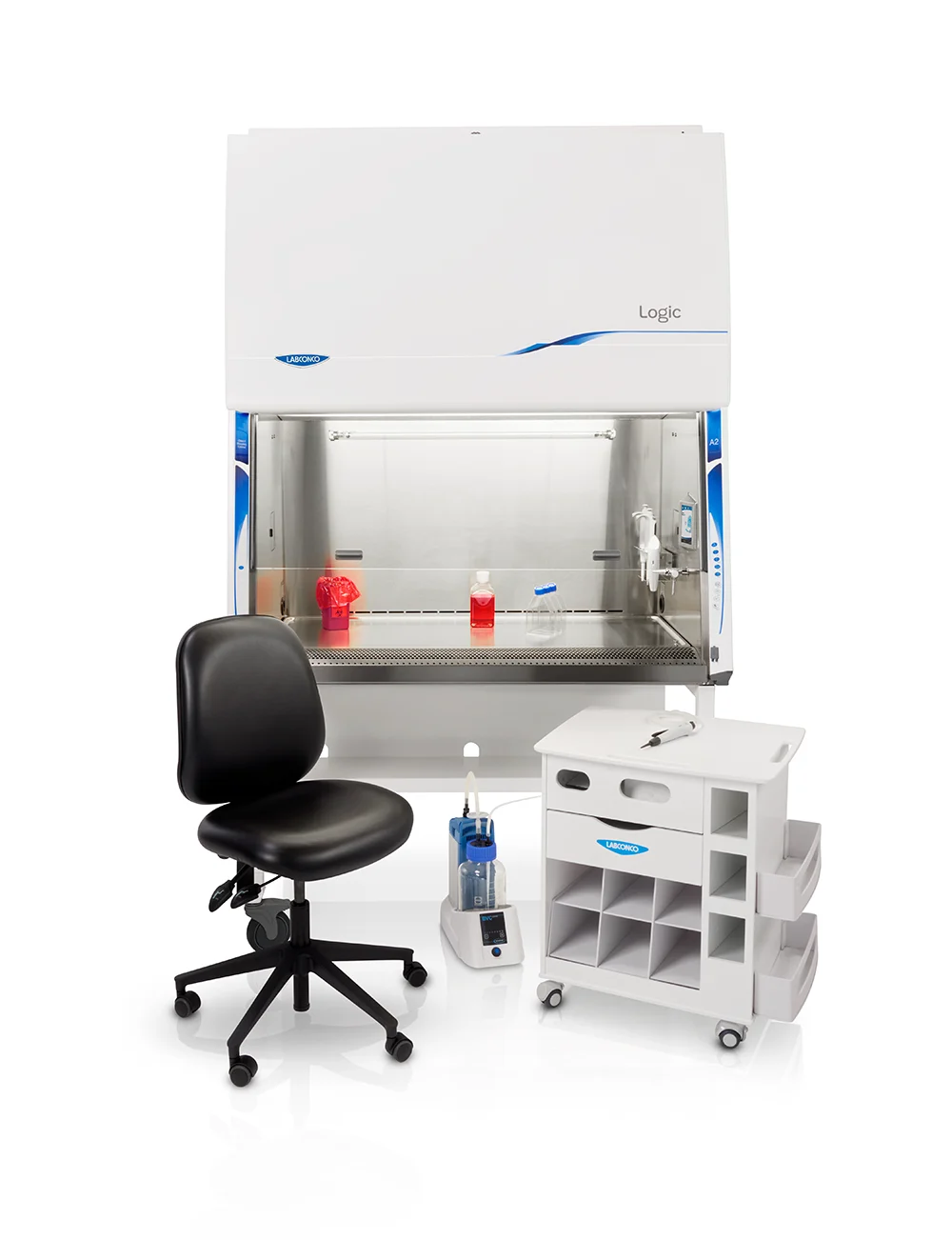
The most recent redesign of the Logic® Biosafety Cabinet, introduced in 2025, represents the culmination of decades of innovation. A new BalanceFlow™ plenum reduced internal air resistance, enabling the cabinet to operate with significantly lower energy consumption while maintaining optimal airflow. This redesign also reduced noise levels and extended filter life, demonstrating how efficiency and performance can go hand in hand.
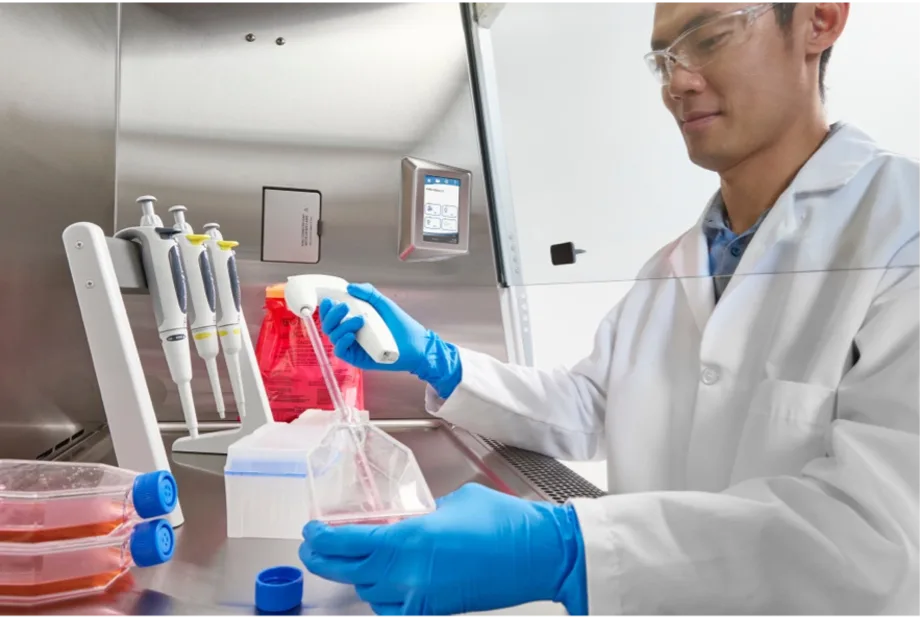
At the same time, Labconco further advanced the user interface with the introduction of a full touchscreen display. Positioned within the cabinet for easy access, the touchscreen allows users to control settings, monitor performance, and receive alerts with intuitive, graphical feedback. This evolution from analog gauges to digital displays and now to interactive touchscreens reflects a broader trend toward smarter, more connected laboratory equipment.
Looking to the Future
In 2026, Labconco celebrates its 50th anniversary in biosafety cabinet manufacturing with the introduction of the Prism™ Biosafety Cabinet. Designed to meet the needs of modern academic laboratories, Prism combines essential features and proven technologies in a streamlined, accessible format. It serves as a reminder that innovation is not only about pushing boundaries, but also about making advanced capabilities available to a wider audience.
Looking back over five decades, a clear pattern emerges. Labconco’s biosafety innovations have consistently addressed three fundamental goals: improving containment and safety, enhancing usability and accessibility, and increasing efficiency and sustainability. From the early laminar flow cabinets to the groundbreaking Type C1 BSC, each advancement has built upon the last, creating a legacy of continuous improvement.
At the same time, these innovations have had a broader impact on the industry. Features such as angled sashes, LCD displays, and real-time airflow monitoring have become expectations rather than exceptions. By setting new standards, Labconco has helped elevate the entire field of biosafety cabinet design.
As laboratories continue to evolve, facing new challenges in research, healthcare, and biotechnology, the role of the biosafety cabinet remains as critical as ever. The next generation of innovations will likely build on the same principles that have guided Labconco for the past 50 years: combining scientific rigor with engineering creativity to create safer, smarter, and more effective laboratory environments.
In celebrating this milestone, Labconco is not just reflecting on its history, but looking ahead to the future of biosafety — where innovation continues to protect the people and discoveries that shape our world.